

Nicknames have always been a part of American sports, and while some are so well-known that athletes are generally known more by their nicknames than by their real names, others have historically been less popular.
In 1936, Walker Smith Jr., an elite American boxer of his time, was even regarded as the greatest boxer of all time and was given the nickname “Sugar Ray Robinson” for a myriad of reasons.
The “Sugar” portion comes from women dubbing the boxer as “sweet as sugar,” while the remainder of the nickname stems from Smith borrowing a friend’s boxer card because of his being below the age requirement.
Smith’s name is usually recognized as the first major nickname for an athlete in America, with the name so iconic that his real name is often less well known than the alternate name.
While Smith’s nickname was generic but good for its time, right-handed pitcher Hugh Mulcahy played baseball during a similar time, yet the outcome for his nickname ended differently.
While he was never one of the league’s worst players, he was part of some poor Philadelphia Phillies teams between 1937 and 1940, leading to four seasons with 16 or more losses, including a league-leading 16 in 1938. This led to Mulchay being dubbed “Losing Pitcher” for the remainder of his career.
“I would say the best nickname I’ve ever heard for a player is ‘Poop,’” said Parker Davis, a sophomore environmental science major. “I’ve never thought that anyone would want to be referred to as that.”
Former University of Kentucky defensive lineman Cory Johnson was nicknamed “poop,” which originated during training camp, when he explained to local media that his ability to maintain weight despite his size was because he “poops so much,” and his teammates stuck with the nickname.
While his collegiate career never led to the NFL draft, he did return a 77-yard fumble recovery for a touchdown against the University of Tennessee in 2015, and later played for the Atlanta Falcons and Kansas City Chiefs.
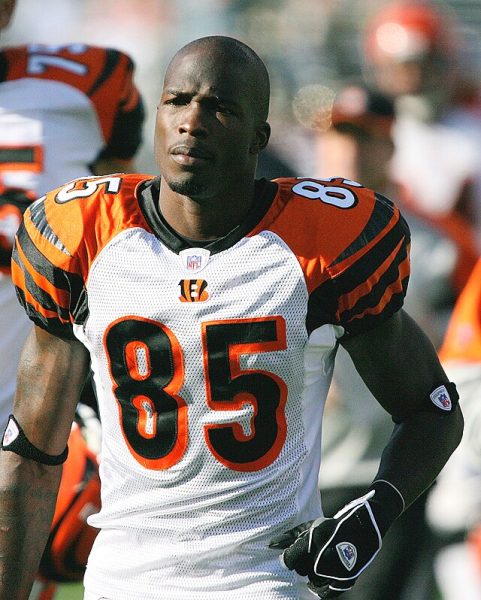
Chad Johnson, one of the better wide receivers of the last two decades, legally changed his name to Chad Ochocinco from 2008 until 2012 to keep his nickname during the latter portion of his career.
Johnson, who donned the number 85 during his time in the league, wanted to wear an “Ocho Cinco” nameplate on the back of his jersey in order to match the number on his back. After the league fined him for the stunt, between 30 and 50 thousand dollars, Johnson legally changed his name and played under the new name to end his career just to spite the league.
“I don’t know too many nicknames, but I definitely know Magic Johnson,” said Noah Rodriguez, a sophomore environmental science major. “His nickname is iconic, and he’s been mentioned even in pop culture.”
Earvin “Magic” Johnson received the nickname from iconic Lansing State Journal sportswriter Fred Stabley Jr. when he was 15, back in 1974. Following a high school game, Johnson’s box score read 36 points, 18 rebounds and 16 assists, in which Stabley dubbed Johnson as “Magic” to describe his all-around performance.
While there are many iconic basketball nicknames, like the aforementioned “Magic” Johnson, Charles “Chuck” Barkley, Shaquile “Shaq” O’neil and Michael “Air” Jordan, there have also been historically unpopular nicknames in basketball.
Ruben Patterson, self-nicknamed “The Kobe Stopper,” became a short-lived, ironic nickname when Patterson boldly claimed he could easily defend the top player in the league, Kobe Bryant, who also had a powerful nickname: The Black Mamba.
Patterson, who stuck to the nickname, made sure he made it known that his defensive prowess could lock down a player like Bryant. However, the nickname quickly became ironic. Bryant, throughout his 20-season career, averaged 25 points, 5.2 rebounds and 4.7 assists, yet in games against Patterson, Bryant averaged 29.3 points, 6.6 rebounds and 4.8 assists in the 23 games against the so-called “Kobe Stopper.”
Nicknames are important in American athletics, and many become so well-known that they quickly outshine the athlete’s real name; however, there are miscues in the process, and it is not always perfect.