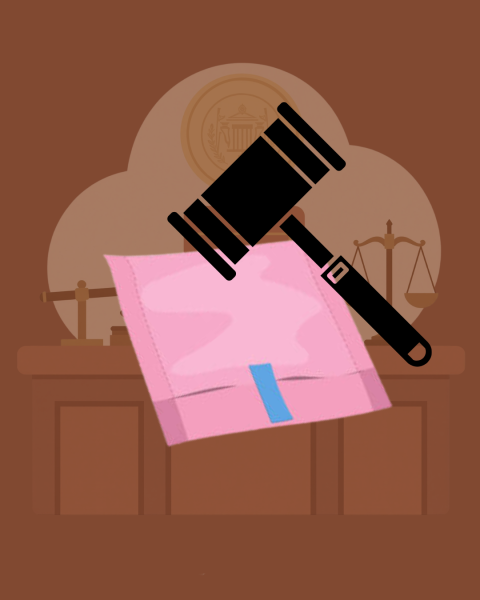
Lawmakers in the Georgia House of Representatives have proposed House Bill (HB) 1144 that, if passed, will make menstrual products exempt from the 4% state sales tax by labeling them as essential goods for four Saturday to Sunday weekends out of the year.
The bill, titled Georgia Hygiene Essentials Tax-Free Period, is a moderately bi-partisan proposal, sponsored by five democrats and one republican. The effort is spearheaded by Kim Schofield and the democratic minority leader, Carolyn Hugley.
The proposal is part of a larger push to make menstrual products more affordable and accessible, but GCSU students are saying that it is not enough.
“It’s kind of a slap in the face,” said Sanai Irving, a junior English creative writing major. “This is the bare minimum that could be done for reproductive rights and health.”
Menstrual products are expensive for most, which has led to nationwide conversations about “period poverty,” the term used to describe the lack of suitable menstrual products and education.
Although the bill is an attempt to combat period poverty, students believe that four weekends out of the year will not make a real difference.
“It would be more meaningful if they got rid of the tax entirely,” said Rhylinn Hendrickson, a sophomore philosophy major.
The National Organization for Women states that the average woman spends about $20 on menstrual products per cycle, leading to an estimated average of $18,000 spent on period products over her lifetime.
The passing of HB 1144 will make it easier for more exemptions to be placed on the sale of menstrual products in the future.
“It’s a step in the right direction, but it feels incredibly limited,” said Lillie Wright, a freshman psychology major.
According to the National Organization for Women, the inability to afford or access menstrual products has forced women to make makeshift menstrual products out of toilet paper or other wadded up paper material, which can cause toxic shock syndrome, yeast infections and urinary tract infections.
“Menstrual products are a basic health necessity and crucial items, so it doesn’t make sense to tax them in the first place,” Wright said. “It’s clear that women’s health needs aren’t being taken as seriously as they could be.”
With the bill, menstrual products would join items such as prescription medications and some groceries that are considered essential in Georgia and are exempt from the sales tax.
The tax holiday would take place in each quarter of the year, creating eight tax-free days. The weekends would be chosen by the state revenue commissioner and posted online. Because the bill only targets state sales tax, local sales tax would still apply.
Many proposals like this have been made before, such as the Georgia Senate Bill 297, sponsored by Senator Randy Robinson (R). SB 297, which would also create an exemption from sales and taxes for certain menstrual products, has been pending for review under the Finance Committee in the Senate since Feb. 27, 2025.
“It’s better than nothing, but I just feel as though having that unnecessary tax in general has been detrimental to everybody who has to suffer with such things,” Irving said. “I mean, pads and period products are so expensive.”
A bill must go through five steps in the House before it can move on to the Senate: a first reading to introduce the bill, a second reading to formally assign it to a committee, a committee review to debate and amend the bill, a rules committee review to decide whether the bill will be scheduled for a vote and then a full vote and floor debate.
A majority vote is required for a bill to move to the Senate. The bill will repeat the steps in the Senate, and only when both chambers approve the final bill can the governor choose to implement or veto it. HB 1144 has gone through the first two steps and has officially been assigned to the Ways & Means committee.
If passed, Georgia would join 28 other states that currently exempt period products from taxation. For more information on the proposal, students can visit the Georgia General Assembly website.