There are pop stars, there are storytellers, and then there is Taylor Swift, whose “Opalite” music video may be one of her most creative and entertaining concepts yet.
It is funny, strange, nostalgic and surprisingly emotional, all wrapped into something that feels more like a short film rather than a traditional music video.
The release itself was strategic, debuting exclusively on Spotify and Apple Music before later appearing on YouTube. It is funny, strange, nostalgic and surprisingly emotional, all wrapped into something that feels more like a short film rather than a traditional music video.
The actors connect to Swift’s recent media appearance, when she was previously on “The Graham Norton Show” on Friday, Oct. 3, 2025, to promote her 12th studio album, “The Life of a Showgirl.” Several guests from that episode, along with host Graham Norton, later appeared in the music video.
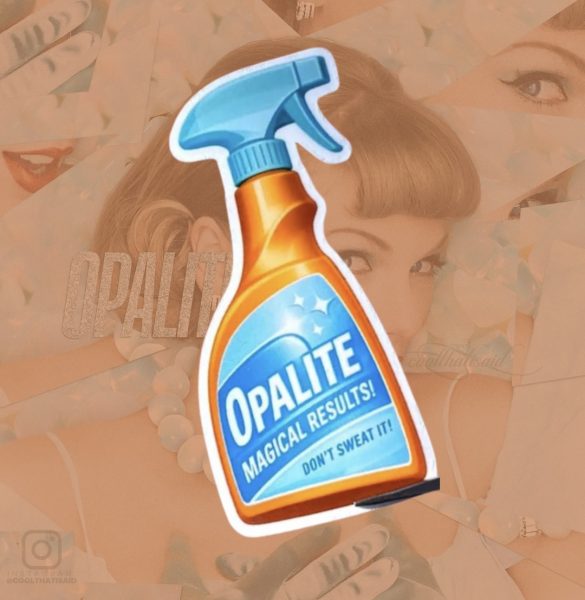
The video for “Opalite” opens like a full-blown ‘90s infomercial. Bright graphics, an exaggerated voiceover and overly cheerful promises introduce a product called “Opalite,” a spray designed to turn life’s crappiness into paradise. I immediately loved how it leans into satire while also setting up the emotional message behind the story.
Caitlyn Balcom, a senior psychology major, said the concept stood out to her and made the video feel both nostalgic and impactful. She explained that the infomercial format added another layer of meaning to the overall message.
“The music video was really reminiscent of those infomercials that would show up on the TV when we were kids,” Balcom said. “That made it both entertaining and meaningful.”
Swift plays a lonely woman who treats a literal pet rock like a partner, while Domhnall Gleeson portrays a man deeply attached to a cactus that clearly hurts him every time he holds it. The symbolism is not subtle, but I think that is the point.
The rock represents a cold and emotionally unfulfilling relationship, while the cactus represents a connection that is painful, yet hard to let go of. Both characters are stuck holding onto something that gives them comfort and damage at the same time. I found myself, like many viewers, wondering if it all nods to Swift’s past relationship with Joe Alwyn.
Kaitlyn Baty, a freshman English major, noticed an important contrast in how the characters use the spray.
“My favorite part was how the man in the video sprayed the cactus but Taylor sprayed herself,” Baty said. “It showed how he needed to fix his friend but she thought she needed to fix herself.”
I feel like this moment subtly echoes Swift’s “I’m the problem, it’s me,” lyric from “Anti-Hero.”
When the video introduces the magical spray, everything shifts. Colors become brighter, scenes become more energetic and their worlds expand. They leave their repetitive routines and start moving toward joy and connection. There is of course the familiar ‘90s tropes, like mall dates, karaoke scenes and a classic playful montage.
I think one of the most meaningful ideas in the video is tied to the concept of opalite itself. Opalite is a man-made stone, and the video makes it clear that happiness works the same way. It is not something that simply appears. It has to be created. Swift and Gleeson’s characters choose to leave behind relationships that feel like “trash” and move toward something healthier.
Alana Lanford, a freshman mass communications and English major, felt that the message resonated with her after watching.
“The video shows how we go through life and not everything works the way we planned it, but we continue to find new beginnings and find what works for us,” Lanford said.
Taylor Swift’s creative vision shines through in every exaggerated infomercial frame and glitter-covered detail. Beneath the humor and absurdity, the story actually reflects on personal growth and the journey toward self-acceptance. With “Opalite,” Swift once again raises the bar, delivering more than simple entertainment and solidifying the video as yet another carefully crafted masterpiece.