While not overtly present or a large group, the black community at GCSU has found a way to form a family and build connections.
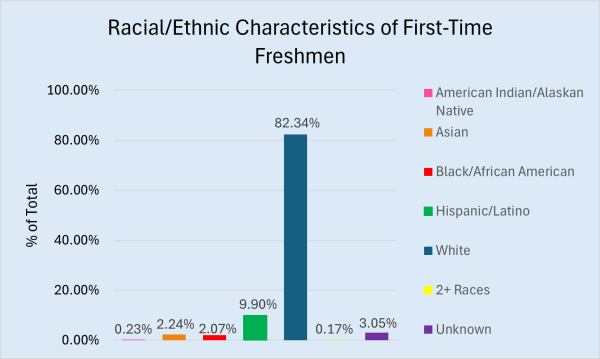
According to GCSU student enrollment data, African American admission to GCSU has been on a steady decline and it has become harder to find people of color outside of designated clubs, organizations and activities.
Students of color have formed and discovered clubs where they can support each other, clubs like the Black Student Alliance (BSA), the National Pan-Hellenic Council (NPHC) fraternities and Women & Allies Action Collective (WAAC). These have become clubs where they feel like they belong and can build camaraderie.
Some students believe there is a problem, however, with the representation at GCSU, and a problem with how the school as a whole sees people of color.
“They need to put more black scholars on the magazines,” said Faith Beamon, a senior mass communication major. “If you want to talk about representation, show us in all ways [not just doing community service.”
A large part of black culture, of the black identity, is community; a community that is constantly shrinking and has always been decreasing. Being able to see one another and have pride in a shared history and celebrate is the central point of black culture.
“My favorite part about black culture is just knowing there was a legacy before me,” said CeDarius Ingram, a junior middle grades education major. “I feel like I’m not just only being successful for myself, but I feel like I’m being successful for generations.”
Black students have found many figures on campus to bond with and to help them connect to their community. Faculty like Andre Joseph, Jasmine Kelly and Eric Carlisle stand as role models to students and offer support to them when the students need it.
“The second figure [who I look up to] would be our on-campus advisor, Mr. Andre Joseph,” Ingram said. “He currently writes books to help guide college students, I’m not quite sure what her job is over at the BSA, but Ms. Jasmine Kelly… Mr. Eric Carlisle and Dr. Carlisle, very helpful, and I’m very grateful.
While there are many black people on campus, many people look back to their family and friends at home when thinking of role models.
“My coach… besides my granddad and, of course, my father, he basically turned me from a boy to a man and showed me the ropes of the game,” Ingram said.
Black studies programs are limited at GCSU, with the offer of two classes, one being directly related to race. Students study more famous black authors-authors who talk about issues still present at the school and in the entirety of Georgia.
“I think it’s bell hooks who writes about this [cultural appropriation],” said Stephanie McClure, a sociology professor. “That it’s always been the case that white culture could consume… the products of people who are not racialized as white, but not the people themselves.”
bell hooks is referring to the fact that a lot of black and brown culture is taken by people in majority communities, but don’t actually listen to the voices or accept the people who created the traditions, as she said in “Eating the Other: Desire and Resistance”. This is very common in forms of the arts like music, language, food, fashion and ideals.
Similar to the consumption of culture and erasure of voices is the enrollment rates of people who are African American. McClure is currently studying the decreasing enrollment rate at GCSU and how it has been consistently decreasing.
“The line of decline is continuous; it’s not like it was good and then it was a cliff; It’s been a continuous,” McClure said.
According to United States census data, 41.5% of Milledgeville citizens are black and 40.5% of the city is impoverished. Because Milledgeville has two colleges in it, many stores are likely to meet the needs of the students, who like spending money but leave most weekends, over the people who live in the city permanently.
Black people at GCSU have found their own community despite the odds and stand proud of who they are despite the number of non-black people around them. They understand where they are and are unapologetic for their culture.
“At first, it was more out of fear,” Beamon said. “I knew people wouldn’t directly understand or embrace me [being black at a predominantly white school], but it is my responsibility to find people that do.”